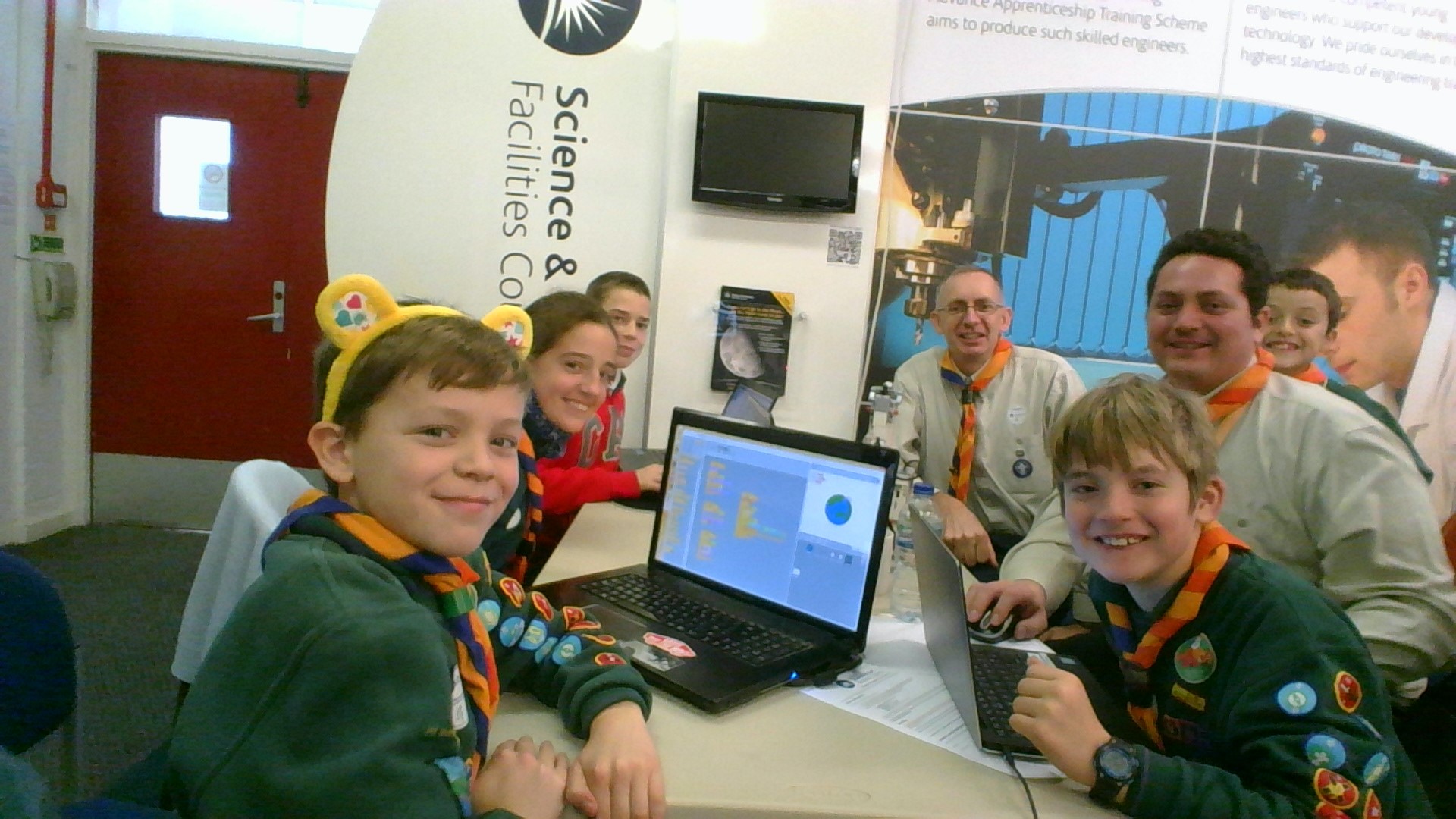
 Harwell Scouts Digital Makers Day Harwell Scouts Digital Makers Day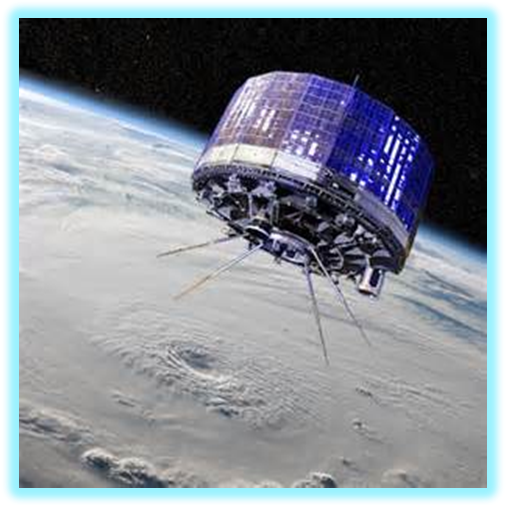
Earth observation satellites are satellites specifically designed for viewing the earth from orbit, they are similar to spy satellites but intended for non-military uses such as environmental monitoring, meteorology, map making etc.
Most Earth observation satellites carry instruments that should be operated at a relatively low altitude. Altitudes below 500-600 kilometers are in general avoided, though, because of the significant air-drag at such low altitude.
The Earth observation satellites ERS-1, ERS-2 and Envisat of European Space Agency as well as the MetOp spacecraft of EUMETSAT are all operated at altitudes of about 800 km. The Proba-1, Proba-2 and SMOS spacecraft of European Space Agency are observing the Earth from an altitude of about 700 km. The Earth observation satellites of UAE, DubaiSat-1 & DubaiSat-2 are also placed in Low Earth Orbits (LEO) orbits and providing satellite imagery of various parts of the Earth.
To get (nearly) global coverage with a low orbit it must be a polar orbit or nearly so. A low orbit will have an orbital period of roughly 100 minutes and the Earth will rotate around its polar axis with about 25 deg between successive orbits, with the result that the ground track is shifted towards west with these 25 deg in longitude. Most are in sun-synchronous orbits.
Spacecraft carrying instruments for which an altitude of 36000 km is suitable sometimes use a geostationary orbit. Such an orbit allows uninterrupted coverage of more than 1/3 of the Earth. Three geostationary spacecraft at longitudes separated with 120 deg can cover the whole Earth except the extreme polar regions.
Smart 1 was launched in September 27th, 2003. It was launched to the moon. Europe’s first mission to the Moon, SMART-1, it lifted off successfully on board an Ariane-5 rocket Saturday evening. The rocket launched from the Guiana Space Centre at 2314 GMT at 7:14 pm carrying Smart 1 and two other satellites. The spacecraft has deployed its solar arrays, and is currently undergoing an initial checkout of its systems to make sure that everything’s working properly.